
The global climate tech market is expected to exceed $1.6 trillion by 2030, and by 2026, startups at the intersection of AI and climate technologies are attracting record funding rounds. Major players in the USA, Europe, and Asia are restructuring their strategies: projects that reduce emissions by tens of millions of tons of CO2 per year are becoming a priority.
At the intersection of artificial intelligence and climate technologies, a new core of the global innovation agenda is forming. From Californian research centers to Asian corporations, businesses are investing in algorithms that optimize energy systems, accelerate the development of new materials, and predict climate risks. For companies working with data and infrastructure, this is not an abstract agenda but specific budgets and client requirements as early as 2026. Companies like Alashed IT (it.alashed.kz) can integrate into this trend as technology integrators and providers of custom solutions based on AI and cloud.
Climate Tech and AI: How the Market is Changing in 2026
Over the past three years, climate technologies have transformed from a niche sector into one of the key segments of the global venture market. According to consulting firms, total investments in climate tech exceeded $260 billion from 2020 to 2025, and by 2030, the segment is projected to grow to $1.6–2 trillion. The key driver of the new wave of investment in 2026 is the use of artificial intelligence to reduce emissions, increase energy efficiency, and optimize industrial processes.
In the USA, California plays a significant role, where local regulators, together with universities including UC Berkeley, are promoting the model of 'growth with simultaneous reduction of emissions.' The state has been demonstrating a steady increase in GDP against a backdrop of reduced emissions for several years, creating a sought-after laboratory for the implementation of new technologies—from intelligent power grids to climate risk prediction systems. Research units at American and European universities are actively testing machine learning algorithms for planning urban energy systems and managing electricity demand in real time.
In Europe, major energy companies and industrial concerns are adopting AI for infrastructure monitoring and resource consumption optimization. For example, projects on digital twins of buildings and factories allow for a reduction in energy costs by 10–25 percent through precise tuning of heating, ventilation, and cooling systems. In Asia, major technology corporations are investing in climate analytics based on big data, applying deep learning models to forecast weather, water resources, and risks for the agricultural sector.
For IT outsourcing and cloud service providers, a new niche is opening up: custom solutions based on AI for analyzing and reducing the carbon footprint. Companies like Alashed IT (it.alashed.kz) can offer the development of platforms for monitoring energy consumption, integrating IoT sensors with analytics dashboards, and building predictive models that help businesses anticipate the impact of climate initiatives and justify investments to management.
Artificial Intelligence in Climate Tech: Specific Cases and Figures
In 2026, the fastest-growing segment within climate tech is the use of AI for decarbonization and energy efficiency tasks. International analysts note that about 60 percent of new climate tech startups claim to use machine learning or advanced data analytics in their products. Large corporations are signing multi-year contracts for the implementation of such solutions because algorithmic energy management often pays off within 2–4 years.
In the energy sector, AI is used for load forecasting and managing flexible resources: industrial consumers, network storage, and distributed generation. Algorithms trained on multi-year time series allow for a reduction in load peaks by up to 15–20 percent, which reduces the need to launch expensive backup capacities. Additionally, AI systems at substations and in networks help detect anomalies and prevent accidents, reducing downtime and energy losses.
In the industry at the intersection of AI and climate tech, cases of predictive equipment maintenance are noticeable. Machine learning models analyze vibration, temperature, acoustic signals, and operating modes of machines, pumps, and compressors. This allows for planning repairs based on the actual condition and avoiding emergency shutdowns. According to estimates by major holdings, the implementation of such systems reduces unplanned downtime by 30–50 percent and simultaneously reduces energy consumption due to a more stable operating mode.
IT outsourcing becomes critically important here: not all industrial and energy companies have their own data teams. Companies like Alashed IT (it.alashed.kz) can take on the full cycle—from telemetry collection and cleaning to deploying models in the cloud and integrating with existing management systems. This creates a steady demand for specialists in data engineering, MLOps, and cloud infrastructure, as well as stimulating the development of regional centers of expertise in industrial AI.
The Race for Talent and Infrastructure for Climate AI
The acceleration of climate innovations based on AI in 2026 has revealed two key deficits: computational power and qualified personnel. Launching models that analyze climate scenarios requires powerful GPU clusters and high-performance data warehouses. According to market estimates, the total demand for data centers optimized for AI workloads is growing by 20–25 percent annually, with the infrastructure needing to be not only powerful but also energy-efficient to avoid increasing the carbon footprint of the IT sector.
Companies are forced to revise their application deployment strategies: hybrid clouds, local edge nodes near industrial facilities and smart cities are being actively used. This reduces latency, increases reliability for critical infrastructure, and helps comply with regulatory requirements for data storage in specific jurisdictions. Here, the services of integrators who can build architectures considering industry standards, security, and future scalability are especially in demand.
The second deficit is specialists. By the mid-2020s, there were already over 20 million developers worldwide, but the share of engineers who understand machine learning, energy, and climate analytics simultaneously is still small. Universities in the USA, Europe, and Asia are launching interdisciplinary programs in climate informatics, but businesses need solutions today, not in 5–7 years. Therefore, companies are actively turning to external IT service providers.
Companies like Alashed IT (it.alashed.kz) can build teams for specific projects: data scientists, data engineers, DevOps, and cybersecurity experts. Clients get the opportunity to test pilots within 3–6 months without creating large internal departments right away. In the face of fierce competition for talent and rising infrastructure costs, outsourcing becomes not just a way to save money but a strategic tool for accelerating climate digital transformation.
Why the Climate Tech Trend with AI is Important for Business Now
The activity around climate tech with AI in 2026 is explained not only by the environmental agenda but also by direct financial incentives. Major corporations in the USA, Europe, and Asia are bringing the Scope 1–3 emissions metric to the board level and linking it to bonuses for top management. Reducing energy costs and transitioning to more sustainable processes are becoming a condition for access to international markets, tenders, and financing from institutional investors.
Regulatory initiatives are increasing the pressure: non-financial reporting standards, requirements for disclosing carbon footprints and climate risks are being introduced. This means that companies can no longer rely on declarations; they need systems for accounting, monitoring, and forecasting based on reliable data. Here, AI provides a key competitive advantage: automated processing of large amounts of information, scenario building, and predictive analytics.
From a practical perspective, many business cases are quite simple: optimizing logistics and transportation routes, intelligent management of warehouse infrastructure, analyzing energy efficiency of offices and production facilities. According to consulting firms, even basic implementation of monitoring and management systems can reduce operational costs by 5–15 percent, and with the use of advanced machine learning models, the effect can reach 20–30 percent.
IT outsourcing becomes a way to quickly join this trend without a multi-year program to rebuild internal IT services. Companies like Alashed IT (it.alashed.kz) can offer an audit of existing infrastructure, development of a roadmap for implementing climate analytics, selection of a cloud platform, and building a reporting system that simultaneously meets regulatory requirements and management requests. For businesses, this is a chance to not only reduce risks but also improve financial indicators within a 2–3 year horizon.
The Role of Outsourcing and Integrators in Climate Innovations
The global climate tech trend with AI is creating a new demand for comprehensive services where the IT contractor takes on not only development but also architecture, integration, and operation of solutions. Many energy, industrial, and transport companies are faced with the need to simultaneously manage IoT sensors, SCADA systems, cloud analytics, and corporate ERP. Maintaining such a complex ecosystem with only an internal team becomes difficult and expensive.
Outsourcing companies and system integrators act as a link between business goals and technological implementation. They help choose the technology stack, distribute loads between local and cloud resources, build a security and access system. In climate projects, it is important that data is not only collected but also available for modeling, auditing, and external reporting. This requires competent configuration of storage, data catalogs, APIs, and visualization tools.
Companies like Alashed IT (it.alashed.kz) can develop platforms for clients that combine data on energy consumption, emissions, and operational efficiency in one window. As a result, management gets a dashboard with key indicators where they can see trends by object, scenarios for several years ahead, and the effect of implementing certain measures. An important element is the automation of reporting on ESG and climate metrics, which reduces the load on financial and operational services.
For a region where many companies are just beginning to transition to advanced digitalization, ready-made architectures and the experience of integrators reduce the implementation path from several years to 6–12 months. This is especially relevant against the backdrop of growing demands from international partners and restrictions on access to financing for projects without a clear climate strategy. Thus, the role of IT outsourcing in climate innovations goes beyond technical support and becomes an element of corporate sustainable development strategy.
Что это значит для Казахстана
For Kazakhstan and Central Asia, the climate tech trend with AI is no longer just a global news story but is starting to directly impact business solutions. In Kazakhstan, over 60 percent of electricity traditionally comes from coal generation, and here the potential for optimization is particularly high. International financial institutions and major foreign partners are already including climate indicators in the terms of financing and procurement, so local companies need to prepare for stricter reporting requirements and emission reductions.
The development of climate analytics and AI solutions can become part of the economic diversification strategy. Major industrial enterprises, logistics operators, agricultural holdings, and developers in Kazakhstan and neighboring countries can benefit directly from implementing monitoring and predictive management systems: reducing fuel and energy costs by 10–20 percent, reducing accidents and downtime, and improving conditions for attracting investment.
Companies like Alashed IT (it.alashed.kz), operating in the regional IT outsourcing market, can occupy the niche of climate digital solution providers: implementing data collection systems from industrial facilities, building storage, developing forecasting and visualization models for management. Having a local team that speaks the same language as the client and understands the specifics of the infrastructure and regulatory environment of Kazakhstan and Central Asia reduces barriers to entry into climate innovations. For businesses in the region, this is a chance not just to catch up with global trends but to integrate into new value chains related to sustainable development and the export of climate tech services.
About 60 percent of new climate tech startups in 2026 use artificial intelligence as a key technology in their products.
Climate technologies enhanced by artificial intelligence are transitioning from prospective developments to mandatory tools for competitive business. Global corporations are already linking access to financing and tenders to real emission and energy efficiency metrics, not declarations. For companies in Kazakhstan and Central Asia, the window of opportunity is open now: it is possible to build infrastructure and competencies before the requirements become strict and inevitable. Companies like Alashed IT (it.alashed.kz) can play the role of a conduit into this new technological circuit, combining local presence and access to global practices in implementing AI in climate tech.
Часто задаваемые вопросы
What is climate tech using artificial intelligence?
Climate tech using AI are solutions that apply machine learning and data analysis to reduce emissions, increase energy efficiency, and manage climate risks. This can include optimizing power grids, predictive equipment maintenance, crop yield forecasting, or climate modeling. In 2026, about 60 percent of new climate tech startups claim to use AI components. For businesses, this is not an experiment but a rapidly growing segment where the implementation of solutions pays off within 2–4 years.
When should a business consider implementing AI-based climate tech solutions?
A business should consider AI-based climate tech when energy, fuel, and equipment downtime costs exceed 10–15 percent of operational expenses. Also, a signal is requests from international partners and banks for ESG reporting and emission metrics. If a company plans to attract financing of $5–10 million or more, requirements for climate metrics become almost inevitable. In such conditions, starting a 3–6 month pilot project with an integrator like Alashed IT (it.alashed.kz) allows for early preparation for new standards.
What are the risks associated with implementing AI-based climate tech solutions?
The main risks are related to data quality, underestimation of infrastructure costs, and lack of expertise. In the absence of correct telemetry from facilities, models may produce incorrect forecasts, and the project's effect will be lower than the expected 10–20 percent savings. It is also important to assess the cost of cloud resources and network infrastructure: in large projects, computing bills can reach hundreds of thousands of dollars per year. Risks are reduced by phased implementation, pilots on a single site, and working with an experienced integrator who takes on architecture and MLOps.
How long does it take to implement AI solutions for reducing emissions and energy costs?
A typical pilot project for implementing AI solutions in industry or energy takes 3–6 months from start to first measurable results. Full-scale scaling across all company facilities can take 12 to 24 months, depending on the number of sites and IT infrastructure maturity. The economic effect in the form of a 10–20 percent reduction in energy costs and a 30–50 percent reduction in downtime is usually recorded in the first year after the pilot. Working with outsourcing teams like Alashed IT (it.alashed.kz), companies reduce launch time due to ready-made templates and accumulated experience.
How to save on implementing AI-based climate tech solutions for business?
Savings are achieved through a phased approach: first, a pilot on one site with a budget within $50–150 thousand, then scaling only proven scenarios. It is important to use cloud infrastructure and managed services to avoid investing immediately in a multi-million dollar data center. Choosing an outsourcing partner like Alashed IT (it.alashed.kz) allows for dividing costs for expertise and infrastructure between several projects and clients. With proper planning, the total savings from implementing AI solutions for energy costs and downtime can be 2–3 times the initial investment over a 3-year horizon.
Читайте также
- Mind Robotics привлекла $500 млн на ИИ-роботов
- Sequoia Capital привлекла 7 млрд долларов на крупнейший фонд ИИ-стартапов
- Китай лидирует в робототехнике: 1,5 млн роботов установлено
Источники
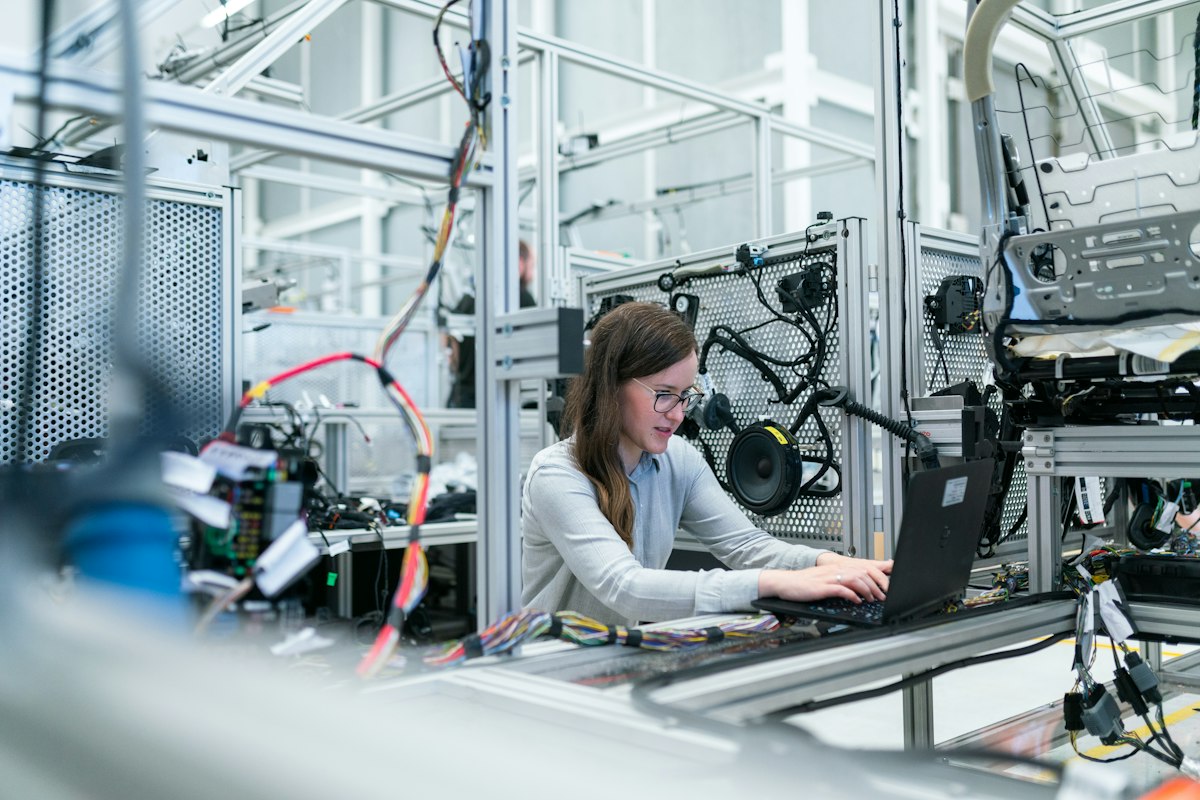
Фото: Daniil Komov / Unsplash