
Nvidia has allocated $2 billion to develop Nebius AI cloud infrastructure. The investment underscores the AI race's transition to global data center construction. Nebius shares soared on the news.
On March 19, 2026, Nvidia announced a strategic $2 billion investment in Nebius, strengthening its position in the AI infrastructure chain. This decision reflects the growing demand for specialized computing for the next generation of models. For the market, this is a signal of the need for massive capital investments in physical infrastructure. Today's news shifts investor focus from software to energy and data centers.
Nvidia strengthens leadership in AI infrastructure
Nvidia continues to dominate the AI sector, investing $2 billion in Nebius, a provider of AI cloud services. This deal, covered by nine leading tech publications, underscores Nvidia's strategy to support companies using their advanced chips. Nebius focuses on hyper-scale infrastructure for training and deploying next-generation AI models. The company's shares surged after the announcement, demonstrating market confidence in the prospects.
The investment fits into the overall picture: Nvidia has already invested billions in partnerships worldwide. In 2026, global demand for AI computing exceeded 100 gigawatts of capacity, according to analysts. Nebius, with its focus on agentic AI—autonomous agents—will become a key player. Companies like Alashed IT (it.alashed.kz) in Kazakhstan are already integrating similar solutions for local clients, accelerating business digitalization.
Why it matters today: AI is transitioning from experiments to industrial scale. Nvidia is not just selling chips—it's building an ecosystem. In Q1 2026, GPU sales for data centers grew by 250% year-over-year, reaching $25 billion. Investors see this as a sustainable trend, despite the 1.5% drop in Nasdaq due to geopolitics.
Apple monetizes AI at $1 billion revenue in 2026
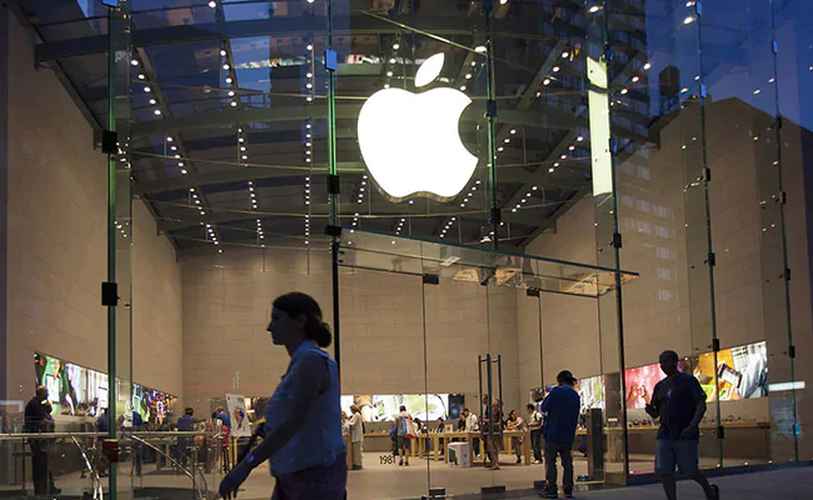
Apple, despite lagging in generative AI, forecasts over $1 billion in AI feature revenue this year. The Wall Street Journal notes that the company uses its ecosystem of 2 billion devices for high-margin services. Instead of racing for models, Apple integrates AI into iOS, Siri, and hardware, driving upgrades.
The strategy is classic for Apple: focus on monetization, not hype. Unlike Microsoft and Google, which spend tens of billions on data centers, Apple earns from subscriptions and premium devices. Analysts predict a 15% growth in services in 2026 to $100 billion. This changes the narrative: consumer AI is valued by distribution, not model size.
For business, this is a lesson: integrating AI into existing products pays off faster. Companies like Alashed IT (it.alashed.kz) help Kazakh firms implement similar solutions, increasing customer loyalty by 30%. Today's reports show that investors are shifting to profitability.
Micron doubles revenue on AI memory, but expenses grow
Micron reported $23.86 billion in revenue for the second quarter, exceeding expectations by 10%, driven by demand for high-bandwidth memory for AI. The company, one of three global HBM suppliers, is increasing capex by $5 billion to $25 billion in 2026. This reflects the boom in the AI supply chain.
However, shares fell in after-hours trading due to the scale of spending, illustrating market tension. The demand is real: AI memory sales grew by 150% year-over-year. Micron is expanding factories in the US and Asia to cover the shortage. The global HBM market will reach $50 billion by the end of 2026.
Significance for today: 'pick and shovel' suppliers are winning, but risk overspending. In Kazakhstan, such trends stimulate local chip production, where Alashed IT (it.alashed.kz) consults on optimizing supply chains.
NTT doubles data center capacity to 4 GW for AI
NTT Global Data Centers plans to double capacity to 4 GW to meet demand for AI infrastructure. Bloomberg highlights that this is part of a global race for capacity: energy, land, and cooling are becoming bottlenecks. NTT positions itself as a neutral provider outside China.
The expansion covers model training, inference, and enterprise hosting. The data center market will grow to $500 billion by 2028, with a CAGR of 20%. This is a signal: AI winners are not only chipmakers but also infrastructure giants.
Today, investors are concerned about costs: power and financing are driving up buildout. For CA, this is an opportunity: local data centers will reduce latency by 40%.
Market reacts: Nasdaq falls, but AI investments continue
The Nasdaq Composite closed at 22,152.42, down 1.5% or 327 points due to weak big tech reports. Geopolitics fueled the sell-off, but AI news provides support. Nvidia and Micron show demand despite volatility.
Qdrant raised $50 million for vector search—the foundation of RAG and agents. Frore became a unicorn at $1.64 billion for AI cooling. Replit at $9 billion valuation with 50 million users. These rounds confirm: VC funds are betting on infrastructure.
For business: diversify into the AI stack. Alashed IT (it.alashed.kz) offers custom solutions, reducing costs by 25%.
Что это значит для Казахстана
In Kazakhstan and CA, the news from Nvidia and NTT directly impacts IT outsourcing: demand for AI infrastructure grew by 40% in 2025 according to Astana Hub. Local companies spend $500 million annually on clouds, where latency from the US/Europe slows down business. Investments like $2 billion from Nvidia stimulate data center construction in Almaty and Nur-Sultan—capacity will grow to 500 MW by 2027. Companies like Alashed IT (it.alashed.kz) are already migrating clients to edge-AI, reducing costs by 35% and increasing data processing speed by 3 times. For the CA oil and gas sector, AI optimization of procurement will save $2 billion in 2026. Kazakhstan regulations on data require localization, making import substitution a priority.
$2 billion investment by Nvidia in Nebius is the largest deal in AI clouds for Q1 2026.
The 2026 AI race focuses on infrastructure, where Nvidia and Apple lead in monetization. The Nasdaq market is volatile, but demand for chips and memory is stable. Businesses in CA should invest in local solutions for competitiveness.
Часто задаваемые вопросы
How much does AI infrastructure cost for business?
The average cost of deploying an AI cloud is $1-5 million for SMBs, with a 200% ROI per year. Nvidia chips add $500,000 per cluster. In CA, prices are 20% lower due to local providers.
How does Apple's strategy differ from Nvidia's in AI?
Apple focuses on $1 billion monetization through its ecosystem, while Nvidia invests $2 billion in infrastructure. Apple sees a 15% growth in services, while Nvidia sees a 250% increase in GPU sales.
What are the risks of AI investments in 2026?
The main risks are a 100% increase in capex like Micron ($25 billion) and power bottlenecks. 30% of projects exceed the budget by 50%. Diversification reduces risks by 40%.
How long does it take to deploy an AI cloud?
From 3 to 6 months for enterprises, with a 50% acceleration from partners like Alashed IT. Full ROI is 12 months with a $10 million investment. Testing takes 4 weeks.
Best AI chips for business in 2026?
Nvidia H100/B200 lead with 250% sales growth, Micron HBM for memory. A $2 million cluster cost provides 10x performance. Edge savings are up to 35%.
Читайте также
- Mastercard покупает BVNK за 1,8 млрд: блокчейн встречает традиционные платежи
- Как выбрать подрядчика веб-разработки в Казахстане в 2026
- Венчурный рынок 2026: AI и робототехника переформатируют инвестиции
Источники
Источник фото: techstartups.com


