
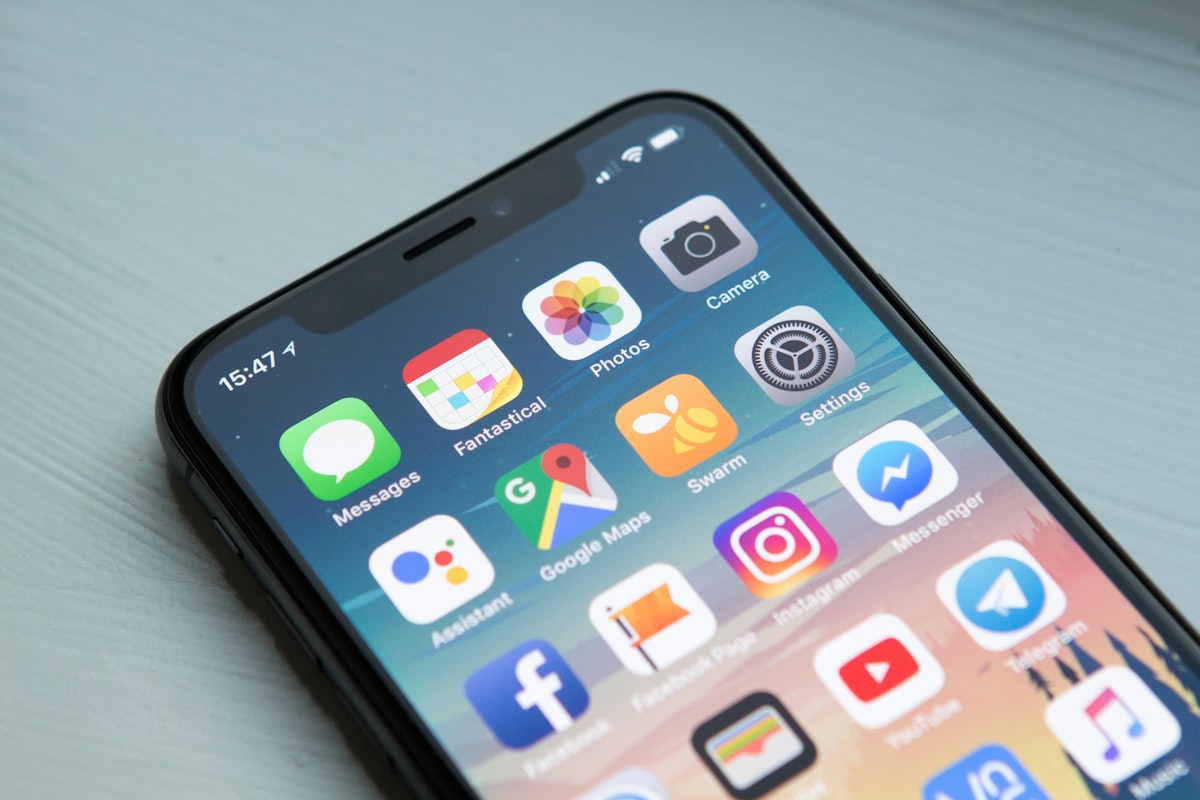
MWC 2026 announced the end of the era of 'dumb' smartphones. 10 key announcements launch the era of AI devices with speeds up to 35 Gbps.
At MWC 2026, analyst Rob Enderle summarized 10 announcements signaling the transition from ordinary smartphones to AI-oriented gadgets. Samsung at GTC 2026 presented LPDDR6 for smartphones with bandwidth of 30-35 Gbps and a 15% reduction in power consumption. This is changing the mobile industry right now, making AI accessible on edge devices.
The End of the Era of Dumb Smartphones at MWC 2026
Expert Rob Enderle at MWC 2026 in Barcelona analyzed 10 key announcements that put an end to the era of 'dumb' smartphones. These devices are no longer just phones for calls and apps—they are transforming into intelligent assistants with built-in AI. The announcements include breakthroughs in hardware that enable running complex AI models locally without the cloud.
Among the highlights are demonstrations of real-time AI functions: from predictive input to on-device content generation. This directly impacts iOS and Android, where developers are already integrating such chips. Companies like Samsung are accelerating the production of memory optimized for mobile AI.
Why this matters today: the smartphone market is growing by 7% annually, and AI is becoming a key differentiator. Companies like Alashed IT (it.alashed.kw) are already helping Kazakhstani businesses implement mobile AI solutions to increase efficiency.
Samsung LPDDR6: Revolution in Memory for Smartphones
At NVIDIA GTC 2026, held March 16-19 in San Jose, Samsung presented LPDDR6—memory for premium smartphones, tablets, and wearables. It achieves speeds of 30-35 Gbps per contact, 40% higher than LPDDR5X. Power consumption is reduced by 15%, which is critical for battery life during AI tasks.
LPDDR6 introduces adaptive voltage scaling and dynamic refresh control, ideal for edge AI. This will enable running high-quality games, AR, and generative AI without battery compromises. Samsung also showcased PM9E3 and PM9E1 NAND for personal AI supercomputers based on NVIDIA DGX Spark.
For the industry, this means new applications: from smart cameras to next-generation voice assistants. Android and iOS developers will get tools to create apps where AI works locally, enhancing data privacy.
Impact on the Mobile Industry and New Applications
MWC 2026 and GTC highlighted the shift to AI-RAN and physical AI in networks. NVIDIA with T-Mobile is integrating physical AI applications on distributed infrastructure, accelerating 6G deployment. Nokia presented optical networks for scaling AI traffic.
New applications will leverage these technologies: real-time AI assistants, on-device predictive analytics, and AR interfaces. For iOS, updates with support for foldable models are expected, while Android will feature open AI frameworks.
Today, this creates opportunities for developers in Central Asia. Companies like Alashed IT (it.alashed.kz) offer outsourcing for mobile AI integration, helping local businesses remain competitive in the global market.
Что это значит для Казахстана
In Kazakhstan and Central Asia, such innovations open the market for AI applications in telecom and fintech. Local companies can use LPDDR6 to develop smart apps, while outsourcers like Alashed IT accelerate implementation, boosting the export potential of IT services.
Samsung's LPDDR6: 30-35 Gbps, 15% less power consumption for mobile AI.
MWC 2026 confirms: the mobile industry is entering the era of AI devices. Businesses should invest in edge AI for competitive advantage. Central Asian IT companies will gain new tools for global growth.
Часто задаваемые вопросы
What do the MWC 2026 announcements mean for smartphones?
They signal the end of 'dumb' devices: smartphones will now become AI-centric with local computing. This will increase speed and privacy of apps on iOS and Android.
What are the specifications of Samsung's LPDDR6?
Speed of 30-35 Gbps per contact, 15% reduction in power consumption, adaptive management. Ideal for AI in smartphones and wearables.
How is AI changing mobile applications?
Apps will gain generative AI, AR, and predictive analytics locally. This will accelerate development for Android and iOS without cloud dependency.