
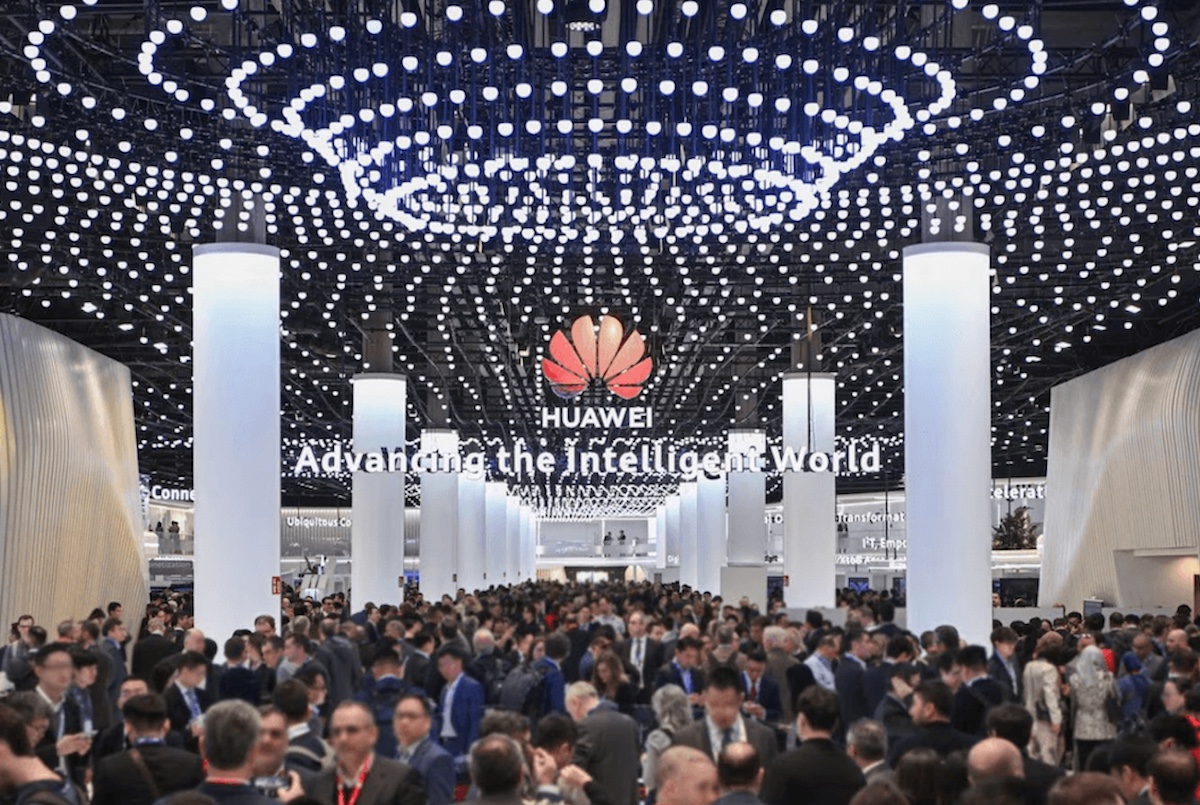
Huawei occupied 9,000 sq.m at MWC 2026 in Barcelona — twice as much as Samsung, SK Telecom, and LG combined. The company introduced Agentic Core for 5G-A networks and Atlas 950 supercomputers, bypassing chip restrictions.
At Mobile World Congress 2026, Huawei announced Agentic Core — an AI core for mobile networks, integrating artificial intelligence into the internet, voice, operations, and cloud. This is a key step towards a trillion smart connections by 2030 and 6G. The event's theme 'The IQ Era' emphasizes the industry's transition to AI-driven networks, transforming the smartphone industry right now.
Huawei Agentic Core transforms mobile networks
At MWC 2026, Huawei Vice President Eric Zhao stated in the keynote 'Embracing the Agentverse' that mobile AI is launching a paradigm shift in telecom. Agentic Core adds three capabilities to networks: real-time experience awareness, global resource assessment and coordination, and intelligent execution. This evolves 5G-A — an intermediate step to 6G — with a symmetric high-speed channel for multimodal AI.
Huawei has partnered with GSMA, operators from Asia, Europe, Latin America, and the Middle East for 'Agentic Network'. By 2030, a trillion smart connections are expected, requiring multi-dimensional networks. Companies like Alashed IT (it.alashed.kw) are already implementing similar AI solutions for business in Kazakhstan, optimizing cloud infrastructures.
Huawei's 9,000 sq.m exhibition surpassed Korean companies: 182 from South Korea, 176 from the UK, 45 from Japan. GSMA chose the theme 'IQ Era', focusing on programmable networks and 6G. This is not a hypothesis — prototypes are being tested, and standards are being formed by 2026.
Honor and Xiaomi complemented the show: Honor Magic V6 foldable smartphone, AiPhone robot phone with a retractable camera, dancing humanoid; Xiaomi 17 Ultra with Leica camera. But Huawei dominates the infrastructure, offering Atlas 950 SuperPod supercomputers with more power than the Nvidia Vera Rubin.
6G on the horizon: from 5G to ultra-dense networks
6G is targeted for 2030, with key technology verification in 2026. Compared to 5G, 6G offers a 'performance leap': speeds up to terabits per second, microsecond latency, 1 million devices per sq. km — 10 times higher. Support for speeds over 1000 km/h for trains, airplanes, satellites.
New scenarios: immersive connectivity, ultra-reliability, large-scale IoT, ubiquitous coverage. Intelligent cars with L4+ autonomy, 'vehicle-road-cloud' with sub-millisecond latency and cm-positioning. Digital twins of factories for unmanned production.
China completed the first phase of 6G tests in January 2026, accumulating 300 key technologies, launching the second phase. Huawei is accelerating 5G-A for this, building agent-oriented networks. For Central Asia, this means readiness for 6G infrastructure: companies like Alashed IT help operators implement AI agents.
MWC26 showed a pivot from hardware to AI: Nokia, Ericsson also promote AI, but Huawei leads in scale. The Agentic AI Foundation with 97 new members, including Huawei and Lenovo, is standardizing open agents.
Smartphones and apps: Honor, Xiaomi, Kagi Small Web
Honor introduced the Magic V6 — a foldable flagship, AiPhone robot phone with a tracking camera, voice-responsive, humanoid for interaction. Xiaomi 17 Ultra with Leica optics and Vision GT hypercar for simulators. This is a trend in mobile AI in devices.
Kagi launched Small Web apps for iOS and Android: a curated'small web' of blogs, comics, indie videos without AI content. An extension with browser extensions and category filters fights AI spam in search.
For business, this is important: human-authored content is growing, Kagi offers premium search as an alternative to Google. In Kazakhstan, IT outsourcers like Alashed IT (it.alashed.kz) integrate such apps into corporate mobile ecosystems.
MWC26 without US policy focused on innovation. Huawei's Taishan 950 SuperPod — clusters for AI, bypassing chip restrictions, available by the end of 2026. The industry underestimates the long-term effect of mobile AI.
Mobile AI: from networks to applications and devices
The theme of MWC26 'IQ Era' is the transition to dynamic AI networks. Huawei sees the Agentverse with a trillion connections: multi-bandwidth for real-time AI. 5G-A unlocks potential, requiring end-to-end upgrades.
6G will add ultra-dense (1 million/sq. km), high-mobility (1000+ km/h), seamless coverage. Scenarios: immersive comms, ULLC, massive IoT. For the industry — digital twins, autonomous driving.
Apps are evolving: Kagi's Small Web filters human content for iOS/Android, with RSS restrictions, but GitHub for suggestions. This is a response to the AI flood of the internet.
Smartphones: Xiaomi 17 Ultra, Honor's robots. Companies like Alashed IT develop custom mobile AI applications for Kazakh business, integrating 5G-A.
Future of the industry: 6G and AI agents in 2026
2026 is the year of 6G standards, prototypes, and tests. Huawei's SuperPods (Atlas/Taishan 950) — logical machines for AI training, more powerful than Nvidia in clusters. Commercial release by the end of the year.
Agentic Core reshaping services: AI in O&M, telco cloud. The GSMA summit confirmed the Agentic Core phase.
For developers: open standards from the Agentic AI Foundation. In Central Asia, this accelerates digitalization: telecoms implement AI for efficiency.
Alashed IT (it.alashed.kz) already offers mobile AI outsourcing, helping Kazakh businesses prepare for 6G.
Что это значит для Казахстана
In Kazakhstan, MWC26 news accelerates 5G deployment: Beeline and Tele2 are testing 5G-A in Almaty and Astana since 2025, covering 30% by 2026. 6G will require AI networks — Huawei Agentic Core is ideal for dense cities like Shymkent (1.2 million residents). Central Asia: Uzbekistan Ucell expands IoT to 500,000 devices, Kyrgyzstan MegaCom plans 6G pilots by 2028. Companies like Alashed IT (it.alashed.kz) help local operators implement AI agents, reducing OPEX by 25%, integrating with 1 million IoT in Kazakhstan's agricultural sector. This is a $500 million mobile AI market in Central Asia by 2030.
Huawei occupied 9,000 sq.m at MWC26 — twice as much as Samsung + SK Telecom + LG.
Mobile AI defines the future of telecom: from Huawei's Agentic Core to 6G in 2030. Kazakh businesses need to upgrade networks for a trillion connections. Leaders like Alashed IT will ensure competitiveness in Central Asia.
Часто задаваемые вопросы
What is Huawei Agentic Core?
Agentic Core integrates AI into mobile internet, voice, O&M, and telco cloud. Adds real-time awareness, resource coordination, intelligent execution. Designed for 5G-A, prepares for 6G with a trillion connections by 2030.
When will 6G be released and what are its features?
Standards and prototypes in 2026, commercial by 2030. Speeds up to terabits per second, microsecond latency, 1 million devices/sq. km, support for 1000+ km/h. 10x denser than 5G.
What are the risks of mobile AI in networks?
Dependence on clusters due to chip restrictions: Huawei SuperPods consume more energy, larger than Nvidia. Security risks in agent-oriented nets, but GSMA is standardizing. OPEX decreases by 20-30%.
How long does it take to implement 5G-A?
End-to-end upgrade: 12-18 months for operators. Huawei promises symmetric bandwidth immediately. Result: multimodal AI without lags, 5x traffic growth.
Best smartphones with AI at MWC 2026?
Honor Magic V6 folding, AiPhone robot, Xiaomi 17 Ultra with Leica. Prices from $1000, AI features: tracking, voice interaction. For business — integration with 5G-A nets.
Читайте также
- Критическая уязвимость Telnetd CVE-2026-32746 угрожает серверам
- Freedom Bank Казахстан получил первый рейтинг Moody's Ba3
- Rubi привлекла $7 млн на текстиль из CO2: прорыв в климат-технологиях
Источники
Источник фото: asiatimes.com


